How a Gin Bar Builds a Memorable Menu
A memorable menu rarely starts with a spreadsheet. It starts with a point of view.
That may sound romantic, but in practice it is one of the most commercial decisions a Gin Bar can make. Bars that try to please everyone often end up feeling interchangeable. Bars that know exactly what they are, and just as importantly what they are not, make decisions faster, train teams better, waste less stock, and give guests a reason to return with a friend.
I have seen this play out in openings, relaunches, and tired midweek service shifts when the room needed a lift. The menus that survive contact with real guests are not the ones packed with clever names and twenty-seven ingredients. They are the ones built around clear intent. A guest should feel that intent within a minute or two, whether they are reading a paper menu at the bar, scanning a QR code, or asking a bartender, “What do you recommend if I usually drink a Negroni?”
For a Gin Bar, the challenge is sharper than it looks. Gin is versatile, expressive, and crowded with possibilities. It can carry citrus, florals, spice, saline notes, tea, herbs, orchard fruit, and bitter structure. That freedom is exciting, but it also tempts operators into making a menu that feels like a catalogue rather than a curated experience. A memorable menu solves that problem. It gives the guest choice without making them work for it.
The menu begins before the first cocktail is written
The strongest gin menus are designed backward from the guest experience. Before anyone starts trialing garnishes or debating glassware, the bar needs to answer a few practical questions. Who is the room for on a Thursday at 6:30 p.m.? Is the bar a destination for serious spirits drinkers, or a neighborhood place where half the covers begin with a gin and tonic? Is food part of the occasion? Does the bar need to move high volume in ninety-minute waves, or can service support slower, more intricate builds?
Those questions shape everything that follows. A destination cocktail bar can ask more of the guest and the team. A high-volume city-center Gin Bar needs drinks that can be executed quickly without losing personality. A hotel bar may need a menu that reassures international travelers while still giving local regulars something distinctive. None of those models is better than the others, but each one demands a different kind of menu.
This is where many bars make an early mistake. They confuse originality with complexity. A menu becomes memorable when guests can understand it, order from it with confidence, and remember at least one drink after they leave. If the concept cannot be explained cleanly by the host, the bartender, and the menu itself, it is probably not ready.
Choosing the house style
Every memorable menu has an editorial voice. In a Gin Bar, that voice often comes from the way gin is framed rather than simply listed.
Some bars treat gin as a technical subject. The menu speaks in distillation methods, botanicals, and provenance. That can work well in a room with knowledgeable staff and an audience that enjoys detail. Other bars present gin through mood and flavor. They organize drinks around freshness, bitterness, brightness, richness, or aromatics. That usually lands better with guests who know what they like but do not want a lesson in vapor infusion.
Neither approach is inherently superior. The key is consistency. If the first half of the menu reads like a sommelier note and the second half reads like a poetry exercise, guests feel the wobble. They may not say it aloud, but they sense it.
A strong house style also narrows creative decisions. If the bar’s perspective is classic cocktails, sharpened and modernized through gin, that gives the team a lane. If the perspective is seasonal British produce paired with juniper-forward spirits, that gives them another. Constraints are useful here. A bar with no limits tends to write itself into mush.
One of the best exercises during development is to ask every member of the senior team to describe the bar in one sentence. If five people give five different answers, the menu is not ready. Guests will see that confusion immediately.
Start with the gins, not just the drinks
A Gin Bar can fall into the trap of building a cocktail menu that happens to contain gin rather than one that truly expresses it. The difference matters.
Not every serve needs to shout juniper, and not every drink needs to be spirit-forward, but the menu should demonstrate why gin is the backbone of the bar. That means understanding how different styles perform in mixed drinks. A classic London dry with strong citrus and coriander can cut through sugar and acid with ease. A contemporary gin with softer juniper and floral top notes may disappear in a build that looks fine on paper. Old Tom can bring roundness to a stirred drink that would otherwise feel angular. Navy strength gives lift and structure when dilution is a concern.
This is where tasting discipline matters. A gin that is beautiful neat does not automatically shine in a cocktail. During development, I like to taste candidate gins in three conditions: neat, with chilled water, and in a stripped-back build that resembles the intended serve. You learn quickly which products hold shape and which get buried.
There is also a commercial layer here. Signature drinks should not all depend on expensive boutique bottles with fragile supply lines. Guests love discovery, but operations need reliability. A memorable menu is still a working document for purchasing, costing, and stock management. If a key drink becomes impossible to serve consistently because one component is always out of stock, its charm evaporates fast.
Building a menu that gives range without chaos
Most guests do not want the largest possible choice. They want enough range to feel seen.
A good Gin Bar menu usually covers several drinking moods without announcing the architecture too loudly. The guest should be able to find something bright, something bitter, something long and refreshing, something spirit-led, and ideally something a little softer in alcohol. That spread matters more than chasing novelty in every line.
The smartest menus often create this variety through structure rather than sheer length. Twelve very distinct drinks are usually more memorable than twenty that blur together. The room notices repetition before the team does. If four cocktails rely on grapefruit, sparkling wine, and a floral gin, the menu may read as broad while drinking narrow.
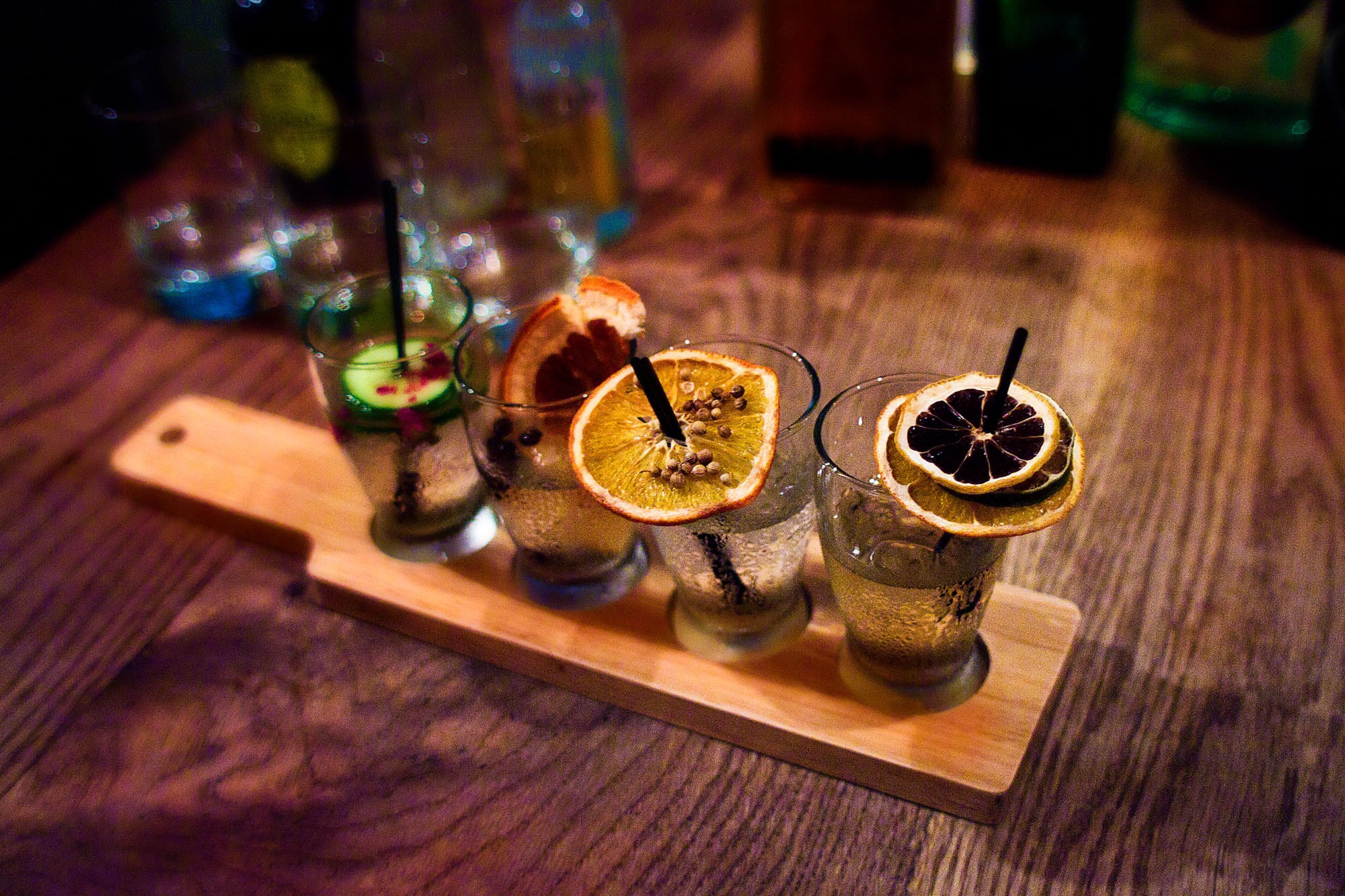
One practical method is to pressure-test each drink against the others, not in isolation. Set the trial serves on a table and ask uncomfortable questions. Which two compete for the same guest? Which one is technically impressive but forgettable after the first sip? Which one only works when explained by the bartender? Which one seems exciting in tasting but would become exhausting halfway through service?
That last question matters more than it gets credit for. Development sessions happen in ideal conditions. Service does not. A drink with three fresh herb touches, a mist, a coin garnish, and an egg white dry shake might feel elegant during trial, but the reality at 9 p.m. On a busy Saturday is different. Memorable for the guest should not mean punishing for the bar team.
The role of the gin and tonic
A Gin Bar lives or dies on its treatment of the gin and tonic.
This is not the least imaginative section of the menu. It is often the clearest expression of the bar’s standards. Guests read a G and T list differently from a signature cocktail page. They expect ease, but they also notice whether the bar has done the thinking for them. Good menus make clear choices about tonic pairing, garnish, and style without drifting into gimmick territory.
A strong G and T offer can do several jobs at once. It can anchor the bar’s identity, support margins, ease pressure on service, and invite less adventurous guests into the experience. It can also be the bridge that turns a casual visitor into a repeat customer. I have seen plenty of guests come in for one familiar gin and tonic, then begin exploring martinis, Collins variations, and house signatures on later visits because the first serve felt considered.
The temptation is to overbuild Gin Bar this section. Ten tonics, fifteen garnishes, and endless mix-and-match options can look generous but create decision fatigue. Most guests appreciate a point of view. If a particular gin works best with a dry tonic and a grapefruit peel, say so. Confidence reads as hospitality when it is informed.
Language on the page matters more than people think
A memorable menu is written, not just designed.
Design can help with pacing, hierarchy, and brand tone, but the actual wording determines whether guests engage. The best cocktail descriptions tell the truth quickly. They create enough intrigue to prompt an order while giving a realistic picture of what arrives in the glass.
This is where professional restraint helps. Menus often drift toward purple language, especially in bars that want to sound premium. Guests do not need a short story about the bartender’s childhood trip to a herb garden. They need to know if the drink is crisp or rich, bitter or bright, short or long. If the menu says a cocktail contains jasmine, white peach, and bergamot, but the liquid drinks like a sharp sour, trust breaks.
There is also a literacy issue in the best sense. Some guests know exactly what gentian or verjus means. Many do not. A good menu can include specific ingredients without becoming opaque. Sometimes one extra word is enough. “Verjus for tart, green acidity” gives the reader a foothold without sounding patronizing.
I have found that the strongest descriptions usually balance three pieces of information: a flavor cue, a structural cue, and one point of personality. For example, “Bright and saline, built on a coastal gin with fino sherry and preserved lemon” gives the guest a far clearer picture than “A maritime meditation on citrus and place.”
Signature drinks need memory hooks
People do not recommend drinks by ingredient list alone. They remember stories, shapes, and sensations.
That does not mean every cocktail needs a theatrical concept. In fact, the most durable memory hooks are often simple. A martini served ice-cold from a small carafe. A highball with a remarkable aroma when it hits the table. A pale green drink that tastes much drier than it looks. A savory gin serve that sounds risky but becomes the one everyone at the table tries.
What matters is that the hook belongs to the bar. If it could appear unchanged in a dozen venues, it probably will not stick. A memorable Gin Bar menu should contain at least a few serves that guests associate specifically with that room.
A short development checklist can keep signatures honest:
- Can the guest understand the drink in under ten seconds?
- Does the gin still matter once the drink is mixed?
- Is there a detail they are likely to mention later?
- Can the team execute it cleanly at full pace?
- Would you reorder it after the first round?
If a drink fails two or three of those tests, it may still be delicious, but it is unlikely to become part of the bar’s identity.
Classics do heavy lifting
There is a strange urge in some new bars to hide the classics, as if a guest ordering a Martini, Negroni, or Tom Collins somehow disrupts the concept. In a Gin Bar, the opposite is true. Classics are part of the concept. They are the living grammar of the category.
A memorable menu does not need to print every classic, but it should signal competence and confidence around them. That can be done through a short classics section, a line noting that the bar welcomes off-menu classics, or by using signatures that clearly converse with the canon. Guests relax when they know the bar understands the fundamentals.
Classics also serve an internal purpose. They reveal whether the team really understands gin as an ingredient. It is easier to hide a weak base spirit inside a busy signature than in a Martini. A bar that makes a clean, balanced Collins and a properly cold, well-diluted Martini sends a powerful message before the guest ever reaches the more inventive part of the menu.
Seasonality should sharpen the menu, not destabilize it
Seasonal thinking can make a Gin Bar feel alive, but it needs discipline. Too much movement creates operational drag and erodes recognition. Too little change and the bar feels static, especially for regulars.
The most effective approach is usually to separate the menu into foundations and flex points. Foundations are the drinks that define the bar and remain available for long stretches. Flex points are the seasonal serves, special G and T pairings, or short-run martini garnishes that give the regulars something new.
This balance helps with training and stock, but it also helps with memory. Guests need time to form attachments. If the best drink on the menu vanishes after three weeks because apricot season has shifted, the bar gains novelty but loses continuity.
Seasonality is not only about produce, either. It is about appetite and context. A January menu can handle more stirred, resinous, bitter profiles. A July menu usually needs more lift and length. That sounds obvious, yet many bars change ingredients without changing the feeling of the menu. Guests notice that too.
Pricing shapes perception as much as flavor
Menu engineering is not glamorous, but memorable bars take it seriously.
Guests read price as a signal of confidence, value, and intent. If the menu jumps wildly between entry and premium serves without explanation, it can feel arbitrary. On the other hand, a clear pricing rhythm helps the guest navigate and can gently steer them toward the bar’s best offers.
In a Gin Bar, there is often a natural spread between accessible highballs and more premium stirred or spirit-forward serves. That is fine, but the value proposition must be visible in the glass and on the page. A higher-priced drink might justify itself through a special gin, a technical process, or a larger format. A lower-priced drink should still feel complete, not like the compromise option.
There is also a behavioral reality that matters here. Guests often choose the second-cheapest or most familiar-looking drink on a menu when uncertain. If those drinks are boring, the whole menu feels flatter than it is. Some of the most commercially important cocktails on a list are not the showpieces. They are the dependable middle of the card.
Staff language is part of the menu
A menu is not finished when it goes to print. It is finished when the staff can speak it naturally.
This is where many well-designed menus fail. The written page is elegant, but the team cannot translate it into table-side guidance. Or worse, they all describe the same drink differently. Consistency matters because guests rarely order from text alone. They ask questions, compare options, and read the bartender’s face for a recommendation.
Training for a Gin Bar should go beyond specs and tasting notes. The team should know why each drink exists, who it suits, what to suggest as an alternative, and what to say when a guest asks for something “not too sweet” or “like a Negroni but lighter.” Those are real sales moments. The menu lives or dies in them.
A few prompts usually matter more than a long script:
- What does this drink taste like in plain language?
- Who usually orders it?
- What is the closest classic reference point?
- What makes the gin choice important?
- When would you steer a guest somewhere else?
When training is done well, the guest experiences the menu as coherent rather than merely printed.
Memory often comes from restraint
Some of the most memorable gin menus I have encountered were not the busiest or the most decorated. They were the most edited.
They knew when to stop. They resisted adding one more syrup, one more flourish, one more explanatory sentence. They understood that contrast creates excitement. If every drink is a house special, none of them is. If every description is lyrical, none of the language stands out. If every garnish is elaborate, the eye gets tired.
Restraint is especially valuable with gin because the spirit already brings built-in complexity. Juniper, citrus, spice, roots, seeds, and florals create a lot of movement before the bartender adds anything at all. The smartest menus let that complexity breathe. They build around it rather than burying it.
There is also confidence in showing a few clear preferences. A bar may favor drier profiles, colder serves, firmer bitterness, or more savory uses of gin. Those preferences will not please everyone, and that is fine. Memorable bars are not anonymous bars.
When the menu finally feels like the room
The test of a menu is not whether it impressed the owners in a tasting session. It is whether it feels inevitable once service begins.
A good Gin Bar menu sounds right in the room. The drinks suit the lighting, the pace, the glassware, the soundtrack, the kind of conversations guests are having. The descriptions match the liquid. The signatures earn repeat orders. The G and T section feels purposeful. The bartenders speak the same language as the page.
That kind of fit does not happen by accident. It comes from making a hundred small, disciplined choices. Which gins deserve the spotlight. Which classics deserve a nod. Which guests are being served first. Which details improve memory, and which merely increase labor. The bars that get this right are not chasing a trend. They are building recall.
And recall is the real goal. Not just that a guest enjoyed a drink, but that they can picture it the next day. That they remember the cold glass, the clean aroma, the way the gin cut through the citrus, the bartender’s recommendation that turned out to be exactly right. That is when a menu stops being a list of drinks and becomes part of the bar’s reputation.
For a Gin Bar, that reputation is built one thoughtful page, and one well-judged serve, at a time.
The Winslow
243 E 14th St
New York, NY 10003, United States
Phone: +1 212-777-7717
FAQ About Gin Bar
How to do a gin tasting?
Start with a small pour and gently smell the gin before taking a small sip. Notice its juniper, citrus, floral or spice notes, then compare how the flavor changes with a little water or tonic. At a gin bar, ask the bartender to explain the selection and botanical pairings.
How to make the best tasting gin and tonic?
Use chilled gin, fresh tonic and plenty of ice. A common starting ratio is one part gin to two parts tonic, adjusted to taste. Choose a garnish that complements the gin's botanicals and stir gently to preserve the bubbles.
What is the smoothest tasting gin?
There is no single smoothest gin for everyone. Perceived smoothness depends on the botanical recipe, alcohol strength, serving temperature and mixer. Describe whether you prefer citrus, floral, herbal or juniper-forward flavors so a bartender can suggest a suitable style.