How a Gin Bar Uses Presentation to Impress Guests
Walk into a strong gin bar and you can usually tell within thirty seconds whether the team understands presentation or merely decoration. The difference matters. Decoration is surface. Presentation is strategy. It shapes what guests notice first, how long they linger over a menu, what they order, how much they trust the bartender, and whether the evening feels worth talking about the next day.
Gin is especially sensitive to presentation because it carries more visible nuance than many spirits. Vodka tends to be neutral by design. Whiskey often arrives with heritage doing much of the work. Gin asks to be interpreted. It has aroma, botanicals, garnish logic, glassware implications, and a broad range of service styles. The guest often encounters it first through the eye and the nose, not the palate. That reality gives a gin bar unusual opportunities, and a few traps.
The best operators know that presentation starts before the first drink appears. It begins with the room, the posture of the staff, the menu language, the quiet cues that tell a guest whether they are in capable hands. By the time a martini lands on the bar or a highball reaches the table, much of the impression has already been built.
The room teaches the guest how to drink there
A gin bar does not need to look theatrical to feel memorable. In fact, some of the most effective spaces are restrained. What matters is coherence. Guests should understand, almost immediately, what kind of experience the bar is offering.
If the focus is classic London dry styles and martinis, the room often benefits from clean lines, good glass display, polished metal, and lighting that makes crystal and citrus oils look alive. If the bar leans toward contemporary craft gin with regional botanicals, the design can handle a little more texture, perhaps stone, wood, botanical references, or visible bottle shelving that encourages curiosity. Either way, visual noise works against the category. Gin has detail. The room should support that detail rather than compete with it.
Lighting deserves more attention than it usually gets. Many bars light for atmosphere and accidentally sabotage their drinks. Too dim, and the garnish, color, clarity, and carbonation disappear. Too harsh, and everything looks clinical. A well-run gin bar often uses layered lighting, enough illumination to make the drink attractive, enough shadow to keep the mood intact. It is a narrow band, but when a bar finds it, every coupe, balloon glass, and Collins serves as a small stage.
Bar tops matter too. A dark stone top can make a pale drink glow. A heavily patterned surface can make even a carefully composed serve look messy. I have seen beautiful gin and tonics disappear visually because they were placed on a crowded marble pattern with low light and too much surrounding clutter. The bartender may have built the drink with care, but the guest never fully saw it.
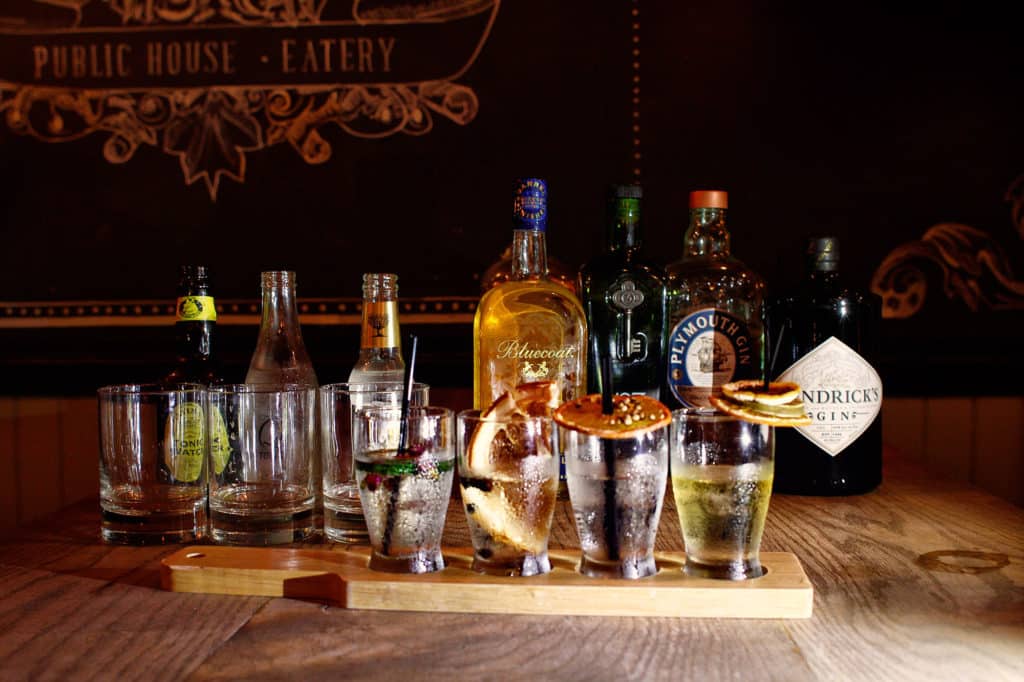
The back bar is another quiet teacher. A wall packed with bottles can look impressive, but a gin bar that organizes its selection with intent tends to impress more deeply. Grouping by style, region, or botanical profile communicates expertise without a word being spoken. It also helps guests feel less intimidated. The display should invite selection, not test memory.
Menus do more than list drinks
In a good gin bar, the menu is part of the presentation, not a piece of administrative paperwork. Guests read menus with their eyes first. Layout, spacing, and naming tell them whether the bar is precise, playful, traditional, or experimental.
Gin menus often fail in one of two directions. Some become encyclopedia entries, crowded with botanical notes and producer details that are interesting to professionals but exhausting to guests on a Friday night. Others strip away too much information and leave the guest guessing, especially when the bar carries unfamiliar labels or house variations.
The most persuasive menus strike a middle ground. They give enough detail to make ordering easier and enough personality to make the bar memorable. Instead of listing every botanical in a gin, a menu might tell the guest what matters in the glass: bright citrus and juniper, savory herbs, peppery finish, soft floral lift. Those phrases have practical value because they connect to expectation.
Presentation here is also about sequencing. What the guest sees first has a measurable effect on what sells. Place a signature gin martini section at the top and you signal confidence. Tuck it beneath beer and generic cocktails and you undercut your own identity. The structure of the menu should make the house point of view visible. A gin bar that offers flights, frozen martinis, tonic pairings, and seasonal house serves needs a menu that helps a guest navigate that variety without feeling managed.
Typography plays a bigger role than many owners expect. Small, tightly set text suggests effort. Clean spacing suggests ease. When guests can scan quickly and then settle into detail, they feel looked after. That emotional ease translates into trust, and trust raises both spend and satisfaction.
Glassware is not just tradition, it is framing
Few categories reveal poor glass choices as quickly as gin. Because gin drinks often depend on aroma, temperature, dilution, and visual clarity, the vessel changes the experience in ways a guest can feel immediately, even if they cannot articulate why.
A classic martini in a well-proportioned stemmed glass looks deliberate. The same drink in an oversized, novelty-shaped vessel can feel tacky and warm too quickly. A gin and tonic in a tall, thin highball emphasizes lift and refreshment. The same build in a wide bowl can open up aromatics and garnish drama, though it may also encourage over-garnishing and faster loss of carbonation if the build is sloppy. There is no universal right answer. There is only the right answer for the specific drink and the specific service style.
This is where presentation becomes operational. If a bar chooses dramatic glassware, it must support that choice with storage, polishing standards, tray service, and replacement budget. A balloon glass may photograph beautifully, but if the staff struggles to carry three at once through a crowded floor, the guest experience degrades. One chipped rim or one awkward spill undoes a lot of visual ambition.
The best gin bars understand restraint. They do not use five types of glassware when three well-chosen forms would do the job better. Consistency itself is a presentational asset. Guests notice when every martini arrives with the same fill line, the same chilled stem, the same polished surface, the same garnish placement. Repetition signals standards.
Ice is presentation you can hear
Good ice changes the sound of service before the guest even tastes the drink. The crack of a clean cube into glass, the quiet movement of a clear spear in a highball, the absence of slush where there should be structure, these details read as quality.
In a gin bar, ice does three jobs at once. It controls dilution, supports texture, and affects appearance. Cloudy, wet, fractured ice makes a gin and tonic look tired almost on arrival. A dense, clean cube brightens Gin Bar the entire drink visually. It also keeps the garnish where it belongs rather than letting it collapse into a chaotic heap.
Guests do not always comment on ice directly, but they often respond to it indirectly. They say a drink felt crisp, clean, or elegant. They mention that it stayed enjoyable longer. They may even order a second round faster because the first one held its shape. That is presentation doing practical work.
This is one of those areas where expense must meet judgment. Not every serve needs hand-cut jewel cubes. A busy service that forces bartenders into delicate ice rituals at the cost of speed will frustrate guests. But a gin bar should never treat ice as a background commodity. The spirit is too aromatic and too architecture-dependent for that.
Garnish can elevate, or it can become costume
Because gin has such a close relationship with botanicals, garnish is often overused in this category. Many bars seem to believe that if one slice of grapefruit works, half a produce drawer must work better. It rarely does.
A garnish should do one of three things. It should contribute aroma, support flavor logic, or add visual clarity. The strongest examples usually do at least two. A lemon twist on a martini releases oils that sharpen the drink and finishes the look with precision. A grapefruit peel on a citrus-forward gin and tonic can be effective if the spirit and tonic support that bitterness. A rosemary sprig can add an attractive nose, but only if it is fresh and placed with intent. When it arrives like a potted plant, the drink starts to feel more like a prop than a serve.
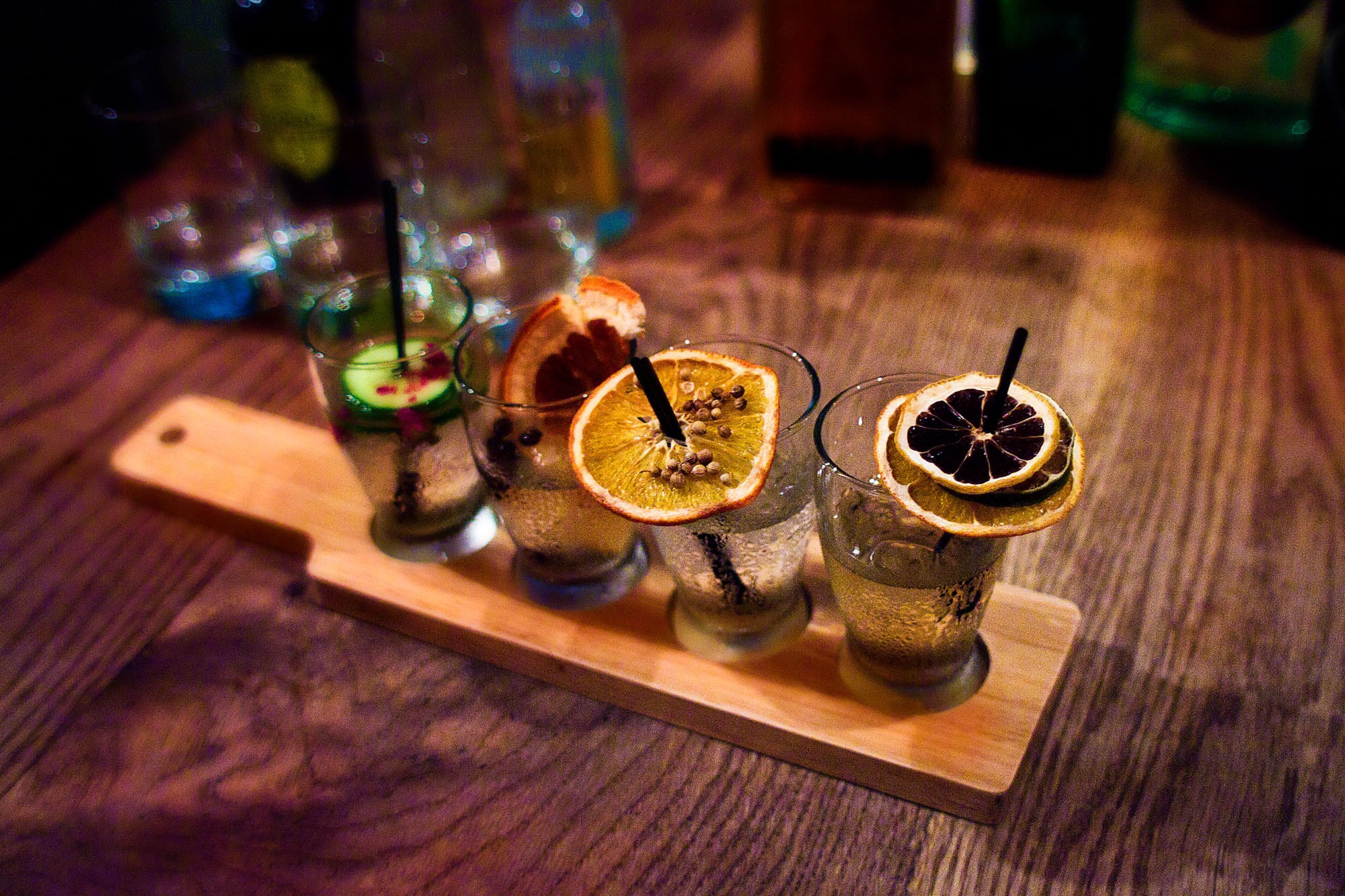
This is where experienced bartenders show their discipline. They know that garnish must match the style of gin, the dilution point, the glass opening, and even the guest’s likely pace of drinking. Cucumber can be elegant in the first five minutes and swampy after fifteen if overused. Peppercorns can look clever and drink awkwardly. Edible flowers may fit a seasonal menu, but they must still belong in the flavor profile.
One of the smartest presentation moves a gin bar can make is to standardize garnish logic across the menu. Not identical garnishes, but a consistent philosophy. Perhaps the bar favors expressed peels, measured herbal notes, and no more than one fresh element per drink. Perhaps it emphasizes regional botanicals with restrained visual Gin Bar styling. Whatever the approach, coherence creates confidence.
The ritual at the bar matters as much as the finished drink
Guests remember process. They remember the cold mixing glass lifted from the well. They remember a bartender expressing citrus over the surface and clipping the twist with clean economy. They remember a bottle opened tableside for a premium tonic serve. They remember whether the staff moved with calm authority or with visible panic.
A gin bar has more opportunities for ritual than many concepts because the category allows for choice without overwhelming the guest. A bartender can offer a specific tonic pairing, explain why one garnish works better than another, or suggest a slightly wetter martini based on the gin’s floral character. Those touches create a feeling of tailoring, and tailored service is a form of presentation.
The trick is not to overperform expertise. Guests want confidence, not a lecture. A crisp sentence often works better than a long speech. “This gin carries a lot of orange peel and coriander, so we keep the garnish simple and let the aroma do the work.” That tells the guest the bar has a reason for what it is doing. It also invites trust without asking for applause.
There is also value in visible preparation where appropriate. Some bars finish martinis in front of the guest with a measured flourish. Others wheel a small cart for a freezer martini service. These can be excellent tools when the mechanics are flawless. They become liabilities when they slow down the room or feel copied from another venue. Presentation must match the operating reality of the bar.
Small sensory details compound the effect
The strongest bars impress guests through accumulation. No single move feels loud, but everything aligns. Napkins are crisp. Coasters are dry. Tonics are served cold enough to hold carbonation. Citrus peels are cut fresh, not oxidized from prep hours earlier. The bottle label faces the guest when a premium pour is presented. The stemware has no detergent haze. Music allows conversation. The seat height works with the bar top. These details rarely earn standalone praise, yet they build the impression that the place is serious.
Scent in the room is part of this equation too. A gin bar should be careful with kitchen bleed, harsh cleaning chemical smells, or overpowering candles. Gin is aromatic by nature. If the room smells like fryer oil or synthetic vanilla, you are forcing the spirit to fight for attention before it ever reaches the table.
Sound deserves the same practical eye. Lively noise can energize a crowd, but too much volume undermines one of gin’s strengths, which is guided conversation. Guests often want to ask questions about the spirit, compare styles, or share a tasting note. If the environment makes those exchanges difficult, the bar gives away one of its best advantages.
Presentation changes with the kind of guest in front of you
A local regular and a first-time visitor do not need the same version of presentation. This is where hospitality separates polished bars from truly skilled ones.
The regular may want recognition above spectacle. Their usual martini arriving with no unnecessary explanation can feel luxurious in its own right. The newcomer may need a little more framing, perhaps a brief recommendation or a visual cue from the staff that the category is approachable. A large group celebrating may respond well to a shared gin service with visible flourish. A solo guest reading at the bar may prefer quiet precision and unobtrusive care.
The important point is that presentation is not fixed. It is adaptable. Good teams learn how to read the table and apply the right amount of theater. Too little, and the experience can feel generic. Too much, and the guest feels processed.
I have seen bars spend heavily on ornate glassware, custom garnishes, and branded accessories only to lose the room because the staff could not judge the mood. Meanwhile, a simpler bar with excellent timing, strong eye contact, and beautifully executed drinks can feel far more sophisticated. Presentation lives in human judgment as much as in physical objects.
Premium perception often comes from discipline, not expense
One misconception in the trade is that high-end presentation requires high-end spending across the board. Some investments do matter. Better stemware, proper refrigeration, quality ice systems, and thoughtful lighting all pay off. But beyond a certain point, discipline matters more than luxury.
A modest gin bar can impress guests if every drink arrives balanced, every garnish is fresh, every menu description is clear, and every touchpoint reflects care. A more lavish room can disappoint if it confuses excess with polish. Guests are surprisingly good at spotting the difference. They may not know the technical vocabulary, but they know when a drink feels composed.
This becomes especially important with gin because the category attracts both enthusiasts and casual drinkers. Enthusiasts notice details quickly, including poor ones. Casual drinkers respond to confidence and ease. Neither group needs gimmicks. Both groups respond to standards.
Premium perception also depends on pacing. A drink served too slowly loses some of its shine, no matter how beautiful it is. A garnish that was clearly fussed over for an extra two minutes is not impressive if the tonic has already softened. Real presentation respects the clock.
The most memorable gin bars make restraint feel luxurious
There is a reason many excellent gin serves look almost simple. Simplicity, when it is backed by technique, feels expensive. A cold martini with the right dilution, a polished glass, a measured twist, and precise placement on the bar can outclass a far more elaborate creation. The guest feels that nothing extra was needed.
That kind of restraint is harder than it looks. It requires confidence from ownership, from bartenders, and from whoever designed the identity of the gin bar. It means trusting the spirit, the service, and the atmosphere enough not to bury them under concepts. It means understanding that the guest is impressed not by how many elements are visible, but by how intentional those elements seem.
When presentation works, it does not announce itself as presentation. The guest simply feels that the place has taste. The menu makes sense. The room flatters the glass. The drink arrives exactly as it should. The staff seems to know what matters. One round becomes two. A recommendation turns into a conversation. The evening gathers its own momentum.
That is the real power of presentation in a gin bar. It is not about showing off. It is about making quality legible. When a bar gets that right, guests do not just admire the drink. They trust the house behind it.
The Winslow
243 E 14th St
New York, NY 10003, United States
Phone: +1 212-777-7717
FAQ About Gin Bar
How to do a gin tasting?
Start with a small pour and gently smell the gin before taking a small sip. Notice its juniper, citrus, floral or spice notes, then compare how the flavor changes with a little water or tonic. At a gin bar, ask the bartender to explain the selection and botanical pairings.
How to make the best tasting gin and tonic?
Use chilled gin, fresh tonic and plenty of ice. A common starting ratio is one part gin to two parts tonic, adjusted to taste. Choose a garnish that complements the gin's botanicals and stir gently to preserve the bubbles.
What is the smoothest tasting gin?
There is no single smoothest gin for everyone. Perceived smoothness depends on the botanical recipe, alcohol strength, serving temperature and mixer. Describe whether you prefer citrus, floral, herbal or juniper-forward flavors so a bartender can suggest a suitable style.