Why a Gin Bar NYC Is the Perfect Setting for Catching Up
There are plenty of places in New York where people meet to reconnect. Coffee shops are often too bright and too rushed. Restaurants can feel overly committed, especially when the reservation clock starts pushing everyone toward appetizers, mains, and the polite question of whether anyone wants dessert. Loud cocktail lounges make it hard to hear each other, and neighborhood dives, for all their charm, do not always lend themselves to a conversation that matters.
A well-chosen Gin Bar NYC experience sits in a very particular sweet spot. It offers enough energy to feel like a night out, enough quiet to support real conversation, and enough ritual in the glass to give the evening shape without taking it over. That balance is not accidental. It comes from the way gin bars are designed, the pace at which people drink in them, and the kind of guest they tend to attract.
If the goal is catching up, really catching up, not just trading headlines and saying “we should do this again soon,” a gin bar often gives you better odds than almost any other setting in the city.
The room does half the work
The best catch-up spots remove friction before anyone even sits down. In New York, that matters more than people admit. The city asks for constant triage. You are deciding how far uptown to go, whether the train is behaving, how long you can stay out on a weeknight, and whether the place you picked is going to punish you with a 45-minute wait and music loud enough to rattle your teeth.
Gin bars often solve these problems through scale and intention. Many occupy smaller footprints than full-service restaurants, but they are usually more polished than a standard corner bar. That creates a room with definition. The lighting tends to be dim but not murky. The seating is often arranged for pairs and small groups, not giant parties. The soundtrack may still have personality, but it usually supports the atmosphere instead of dominating it.
That matters because catching up depends on ease. When two people are trying to reconnect after months of postponed plans, they do not need logistical stress layered onto the emotional task of re-entering each other’s lives. A place that feels composed puts people at ease quickly. You settle in. Coats come off. Phones get set face down. The first five minutes are not spent shouting over a speaker or craning to flag a server.
I have found that people reveal themselves differently in spaces with this kind of balance. Not dramatically, not in some cinematic way, but in a more practical sense. They linger. They pause. They ask one follow-up question instead of checking the room. New York diners often eat with a slight forward tilt, aware that someone else needs the table. In a good gin bar, the posture changes. The conversation can unfold.
Gin encourages a slower, more attentive kind of drinking
Not every spirit creates the same social rhythm. Beer is wonderfully democratic, but it can make a meetup feel casual to the point of forgettable. Wine can be lovely, though a wine list sometimes nudges the table toward decisions that feel too weighty for a simple catch-up. Whiskey bars can be excellent, but they often pull attention toward intensity, rarity, and expertise.
Gin, at its best, invites curiosity without demanding performance.
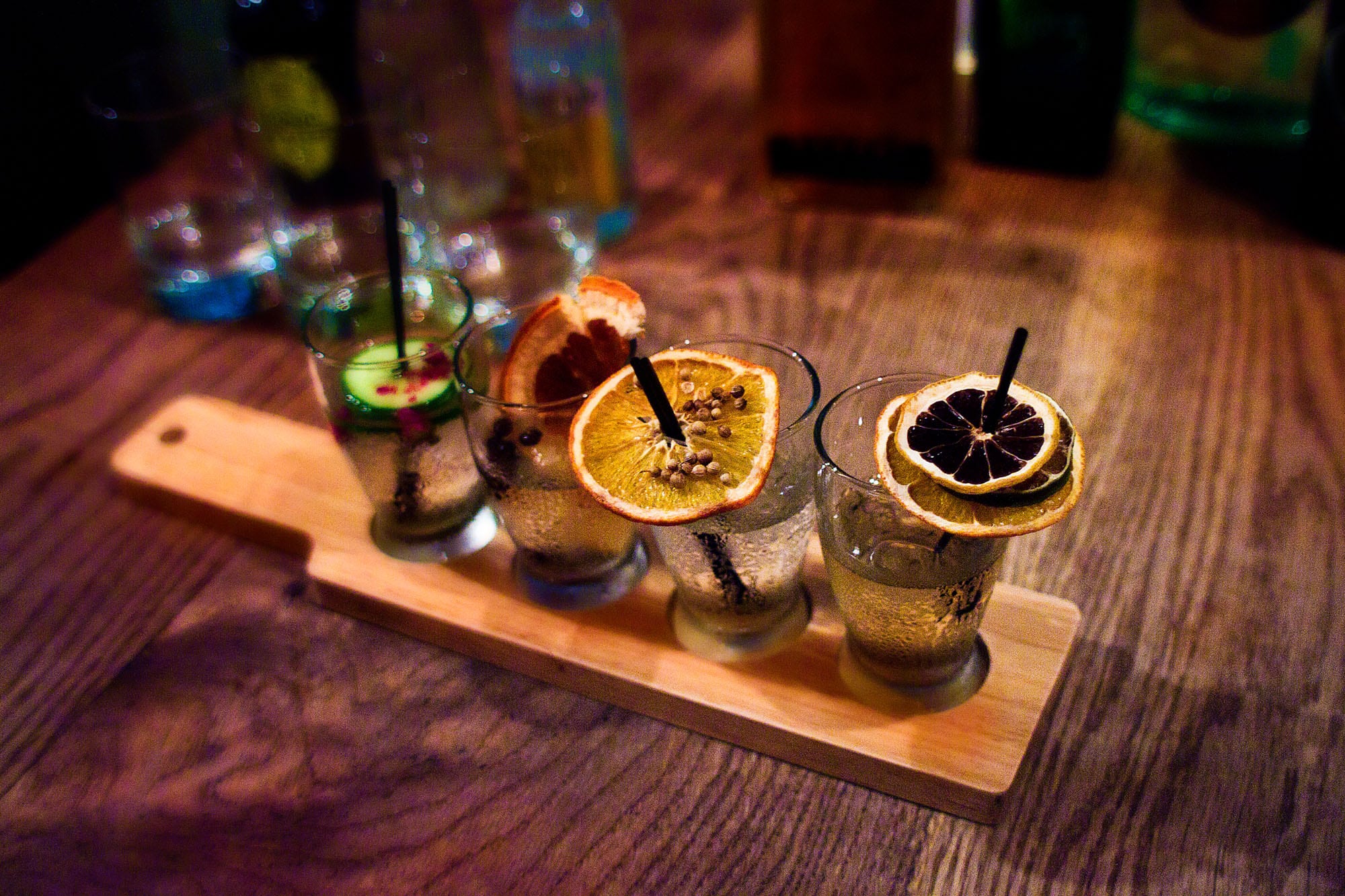
A well-made gin drink has detail built into it. Botanicals, citrus, herbs, spice, bitterness, floral notes, and texture all show up in ways that people can actually talk about. You do not need to be an enthusiast to have a reaction. One drink smells like rosemary and grapefruit. Another tastes crisp and almost saline. Another is soft with cucumber and elderflower. This creates an easy conversational bridge, especially at the start of the evening, when both people are still warming up.
That opening matters. Many reunions begin awkwardly, even between close friends. You need a shared object to get the talk moving. A thoughtful martini, a bright gin and tonic built with a tonic that has real bitterness, or a house cocktail with a seasonal garnish gives people something concrete to notice together. It is social kindling.
Just as important, gin rarely demands speed. A classic martini or Collins is not a shot. It is not something people toss back. It arrives with enough ceremony, a chilled glass, a twist, a coupe, a highball with clear ice, that it subtly tells the table to take a beat. That slower cadence supports better conversation. One round can carry a substantial stretch of actual talking.
In practical terms, that means fewer interruptions from the mechanics of ordering and less pressure to keep pace with a room that is trying to turn over quickly.
Catching up needs atmosphere, not spectacle
There is a difference between ambiance and performance. New York is full of places that aim for the second. You can admire the ambition of a dramatic bar, but if every element is optimized for social media, the room often becomes strangely self-conscious. People are in the space, but not fully present with each other.
A gin bar generally leans toward atmosphere instead. This is one reason the category works so well. Good gin bars are often designed with texture in mind rather than gimmick. Wood, brass, shelves of bottles, polished glassware, small lamps, banquettes, maybe a bar team working with precision but without theater for its own sake. The effect is adult and unforced.
That quality is especially valuable when the conversation carries some emotional weight. Perhaps you are seeing a former colleague after a year apart, reconnecting with a sibling who lives in another borough, or meeting a close friend after one of you has had a difficult season. In those situations, spectacle gets in the way. You want enough atmosphere to make the evening feel intentional, but not so much that the room keeps pulling focus.
A Gin Bar NYC regular will recognize this immediately. The strongest venues are not just places with many gin bottles. They are places where the environment encourages concentration without making the night feel solemn. There is movement around you, but it does not intrude.
The menu gives structure without trapping the evening
One of the underappreciated virtues of meeting at a gin bar is that the menu keeps the night flexible.
At dinner, you are committed to a sequence. Once you sit, you are engaged in a procession of decisions. Sparkling or still, starter or no starter, split something or order individually, another bottle or not, dessert, coffee, the check. There is nothing wrong with any of that, but it does create a framework that can either rush the conversation or stall it.
A gin bar offers lighter architecture. You can meet for one drink and genuinely mean it. You can stay for three rounds and a few plates if the conversation opens up. You can shift from a bracing first cocktail to something softer later in the evening. If one person arrives hungry, many gin bars have enough bar snacks or small plates to solve the problem without forcing the table into full dinner mode.
That flexibility is ideal for city life, where plans are often squeezed between work, childcare, theater tickets, train delays, and the general fatigue of living at high velocity. A catch-up should adapt to the people in it. The venue should not dictate the emotional tone or the duration.
Here is where gin bars often outperform restaurants and large-format bars. They make room for both brevity and drift. If the reunion is warm but quick, no one feels awkward leaving after a drink. If the evening expands, the setting supports that too.
It is easier to hear the parts people usually skip
The real point of catching up is not exchanging bullet points. It is getting past them.
Most adults are skilled at delivering efficient status updates. Work is busy. Family is good. Travel was nice. Apartment hunting was terrible. Everyone laughs, nods, orders another drink, and goes home having shared information but not much intimacy.
A good gin bar helps people move beyond this stage because it supports the kind of listening that requires both calm and a little privacy. You do not need a silent room. Silence can actually make people self-conscious. What you need is acoustic permission, enough background sound that the conversation feels protected, but not so much that details get lost.
This is where many gin bars shine. Their soundtrack and room size often create exactly that pocket. You can say something nuanced without feeling overheard by the whole room. You can admit uncertainty. You can revisit an old story and correct the version everyone has been carrying around for years. You can laugh loudly without becoming the entertainment for everyone nearby.
That matters because catching up is often less about facts than about texture. How someone felt about the breakup. Whether the promotion was worth the stress. Why they left the job that looked so impressive from the outside. These are not topics that survive in a room built for volume and velocity.
The best conversations benefit from small rituals
Human beings are more comfortable opening up when there is a small amount of shared ritual. This is one reason walks work. It is one reason tea works. It is one reason cooking with someone can prompt conversations that would feel too direct face-to-face at a bare table.
A gin bar has its own version of this. There is the look at the menu, the exchange over whether to order a martini or something more playful, the arrival of the drink, the first sip, the inevitable comparison. Dirty or with a twist. More citrus or more herbaceous. One person steals a sip of the other’s drink and suddenly the night has found its rhythm.
These are tiny moments, but they matter. They smooth the transitions between topics. They create pauses that feel natural rather than strained. Good catch-ups are not uninterrupted monologues. They breathe. The ritual around a drink provides those breaths.
I have seen this especially with people who have not met in person for a long time. The first ten minutes can feel almost administrative, a recitation of where life has deposited each person since the last meeting. Then the drinks arrive, and the room changes temperature. The evening loosens. Someone remembers an old trip. Someone confesses they almost canceled because work had been rough. From there, the conversation becomes real.
A gin bar can satisfy different personalities at the same table
Not everyone catches up in the same way. Some people want a snug corner and a classic martini. Others prefer a more lively setting and a drink that tastes bright and unfamiliar. One person may care deeply about spirits and production methods, while the other just wants a place that feels special without being intimidating.
This is another reason the format works. Gin has range. A serious bar can serve a textbook Martini, a French 75 with proper balance, a refreshing Collins, and a lower-proof spritz-style drink that suits someone pacing themselves. You can accommodate different tastes without one person feeling dragged into the other’s preferred scene.
That makes the setting especially useful for mixed social pairs. Think of old college friends whose lives have diverged, a mentor and former mentee, siblings with different habits, or coworkers transitioning into actual friendship. The venue does not ask everyone to share the same identity. It gives them enough overlap to connect.
When picking the right place, a few practical markers help:
- Look for a menu with both classic gin drinks and a short house section, which usually signals range without chaos.
- Favor places where the music supports the room rather than drives it.
- Check whether the bar serves a few substantial snacks, especially if you are meeting after work.
- If the catch-up matters, reserve seats when possible, even if it is only for two.
- Aim for an off-peak start time, often around 5:30 or 6:00 p.m., when conversation is easiest.
Those details may sound minor, but they shape the entire mood of the evening.
New York makes neutral territory important
There is also a city-specific reason a Gin Bar NYC setting works so well. New York friendships often operate across neighborhoods, schedules, and life phases that do not line up neatly. Someone in Astoria meets someone from the West Village halfway. A parent meets a single friend after work. Two former coworkers who once saw each other daily now need a place that feels equally welcoming to both.
A gin bar functions as strong neutral territory. It is more intentional than “just grabbing a drink,” but less loaded than being invited into someone’s domestic space. That balance matters in a city where homes are often small, commutes are annoying, and privacy can feel scarce.
Neutral territory can also reduce social pressure. Meeting at one person’s apartment can create hosting obligations. Meeting for a full dinner can imply a longer commitment than either person wants to promise in advance. A gin bar says: I wanted to choose somewhere good, but I also wanted this to feel easy.
There is generosity in that.
Small plates help, but they should stay in the background
Food plays a supporting role in a successful catch-up. Too little, and the drinks can hit too fast, especially after a long workday. Too much, and the evening starts revolving around courses and service timing. This is where the best gin bars get it exactly right. They offer enough food to steady the evening without turning the table into a full dining event.
A bowl of warm olives, a plate of fries with aioli, a good cheese board, maybe a flatbread or a few skewers, these details matter more than people think. They buy time. They absorb alcohol. They create one more gentle rhythm for the table without asking anyone to stop talking and suddenly evaluate a main course.
There is a practical wisdom here. If you are planning a catch-up that could run long, especially with someone you have not seen in months, assume both of you will be hungrier than expected. New Yorkers often try to squeeze social plans into the cracks of the day. Someone is coming from Midtown after back-to-back meetings. Someone else skipped lunch and does not quite realize it yet. A bar that can feed you lightly without hijacking the evening is doing serious social work.
Not every gin bar works, and that is the point
Saying a gin bar is the perfect setting does not mean every place with juniper on the menu qualifies. Some bars trade on the category without delivering the fundamentals. The room may be stylish but deafening. The cocktails may be elaborate but slow. The crowd may be tuned for celebration rather than conversation.
Judgment matters. The right place depends on the kind of catching up you need.
If you are reconnecting with a close friend after a difficult patch, choose somewhere quieter, with comfortable seating and a shorter drink list. Gin Bar NYC The Winslow If the reunion is more buoyant, perhaps two old coworkers finally comparing notes after leaving the same company, a livelier room may suit the energy. If one of you loves spirits and the other does not, avoid bars that make the menu feel like an oral exam.
There are a few common mismatches worth avoiding:
- A standing-room-only bar if the conversation matters
- Overdesigned cocktails that arrive beautifully but distract from the table
- Extremely dark rooms where reading the menu becomes a group project
- Venues with long waits and no clear place to settle while you wait
The point is not perfection. It is fit. The right fit lowers the effort required to be present with someone.
The city feels different when you have somewhere good to talk
One of the pleasures of living in New York is that the city can frame a conversation and make it memorable. You leave the office, step into evening light or winter cold, take the train a few stops, push through a discreet door, and for an hour or three the outside noise recedes. Not completely, never completely, but enough.
That shift is valuable. Many adults are not short on contact. They are short on sustained attention. Text threads continue for months without anyone saying what they really mean. Group dinners become logistical feats. Phone calls get postponed. Catching up, real catching up, requires a setting that encourages people to stay long enough to move past surface updates.
A good gin bar provides exactly that threshold. It marks the evening as intentional. It asks just enough of you to make the meeting feel chosen. Yet it remains relaxed enough that honesty can slip in without fanfare.
That may be the deepest reason a Gin Bar NYC setting works so well. It offers a rare combination in this city: polish without stiffness, energy without chaos, and pleasure without distraction. In a place where everyone is busy and almost everyone is a little overbooked, those qualities are not trivial. They are what allow two people to stop performing busyness for a while and actually meet each other again.
Sometimes that is all anyone wants from a night out. A good drink, a comfortable room, and enough time to hear what has really been going on. A gin bar, chosen well, is built for exactly that.
The Winslow
243 E 14th St
New York, NY 10003, United States
Phone: +1 212-777-7717
FAQ About Gin Bar NYC
How to do a gin tasting?
Start with a small pour and gently smell the gin before taking a small sip. Notice its juniper, citrus, floral or spice notes, then compare how the flavor changes with a little water or tonic. At a gin bar, ask the bartender to explain the selection and botanical pairings.
How to make the best tasting gin and tonic?
Use chilled gin, fresh tonic and plenty of ice. A common starting ratio is one part gin to two parts tonic, adjusted to taste. Choose a garnish that complements the gin's botanicals and stir gently to preserve the bubbles.
What is the smoothest tasting gin?
There is no single smoothest gin for everyone. Perceived smoothness depends on the botanical recipe, alcohol strength, serving temperature and mixer. Describe whether you prefer citrus, floral, herbal or juniper-forward flavors so a bartender can suggest a suitable style.